


Alternative energy can't save us
The real key is reducing consumption
Last Update: September 2012
Let's be absolutely clear about something: The key to solving our energy problems isn't finding some alternative source of energy. The key is to simply use less energy. That's because:
- Using less energy actually works, you can start today, and it makes a big impact.
- The solution to a wasteful lifestyle is to stop being wasteful, not to try finding ways to continue a wasteful way of living.
- Alternative energy can't supply anywhere close to the same amount of energy that coal and oil has been supplying, for the foreseeable future.
 If you
were hitting yourself in the head with a hammer and it hurt, how would
you solve that problem? Would you look for "alternatives" like
using a softer hammer, or getting a smaller hammer, or maybe wrapping a
towel around your head to soften the blow? Or would you simply stop
hitting yourself in the head with a hammer?! I hope you chose the
latter.
If you
were hitting yourself in the head with a hammer and it hurt, how would
you solve that problem? Would you look for "alternatives" like
using a softer hammer, or getting a smaller hammer, or maybe wrapping a
towel around your head to soften the blow? Or would you simply stop
hitting yourself in the head with a hammer?! I hope you chose the
latter.
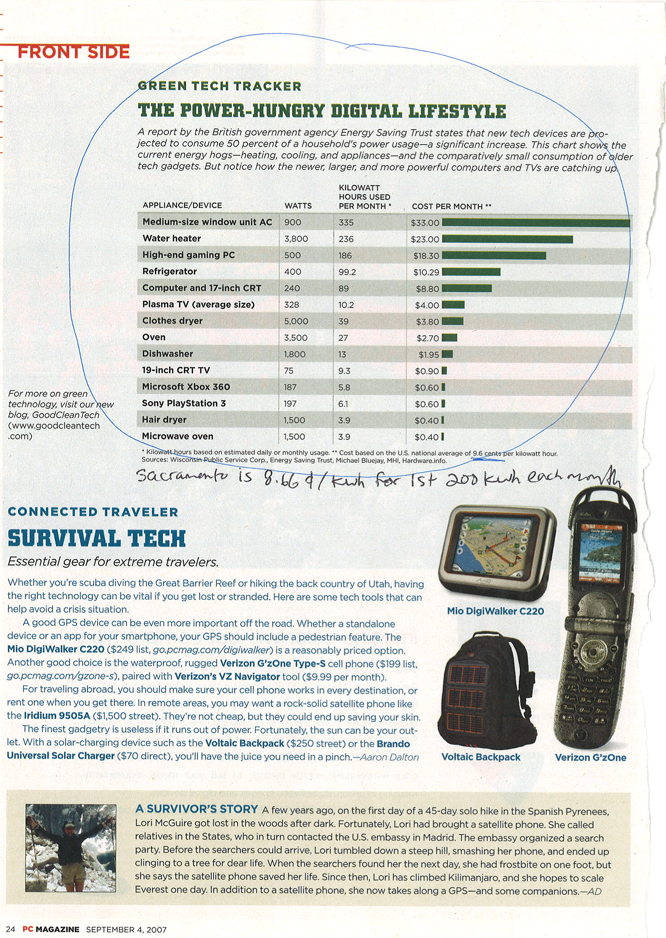
We have an energy crisis because we're hitting ourselves in the head with the hammer. That is, we're using ridiculous amounts of energy. And that holiday is rapidly disappearing as we burn through an ever-shrinking supply of coal and oil. Once it's gone, it's gone, man. The solution is simply to use less. It's ridiculously easy to do, and it works. Cutting our use by 50% is just as good as doubling the amount of energy available. And let me tell you, we are nowhere close to being able to double the amount of energy available with alternatives.
The idea of looking for alternatives is basically
saying, "What other forms of energy exist so I can continue wasting
energy like there's no tomorrow?" That is not a
prescription for sustainability.
Some readers are perplexed by my position and ask me, "Since we have to use some energy, shouldn't the energy we do use be green?" That would be a great question if we had already reduced our consumption to a reasonable level. But few people are asking that question from that perspective. They're asking from the perspective of wanting an energy substitute so they don't have to trouble themselves with conservation.
The truth is that conservation is available right now and has tremendous bang for the buck. It's the low-hanging fruit. If we cut our use by 80% (mine is closer to 90%, so it's possible), our energy stores would last five times longer and the pollution generated would be so small we honestly wouldn't worry about it.
"It is past time for policy makers to get
serious about the most important strategy we can and must adopt in
order to succeed in this new era—energy conservation. Reducing demand
for energy and using energy more efficiently are the cheapest and most
effective ways of cutting carbon emissions, enhancing energy security,
and providing a stable basis for economic planning.
"Unfortunately, energy supply limits and demand
reduction do not support robust economic growth. This is probably the
main reason why policy makers and many energy analysts and
environmentalists shy away from conveying the real dimensions of our
predicament. However understandable this response may be from a
political perspective, it is one that only compromises our prospects as
a nation and a species."
Now, as an individual, if you want to install wind or solar power, then sure, go for it. But the first thing that people who opt for wind or solar find out is that those systems are expensive and can't generate very much power, so they have to drastically reduce their consumption in order to make it work. And bingo, it's the "drastically reducing their consumption" part that is the real benefit to the environment, not the actual source of the energy once that consumption has already been reduced.
Now let's look at some various energy sources to see how they stack up.
Coal
This is how most electricity is generated in the U.S., and it comes with a whole host of problems:
- Burning coal is a powerful cause of climate change and global warming.
- Coal emits all kinds of other pollutants which foul up the air, including sulfur and mercury.
- "Clean Coal" is a marketing ploy. There is really no such thing. Coal is dirty, period.
- Coal's problems start well before it's burned. We get coal by strip-mining, destroying forests and other natural areas (and all the plants and animals that used to be there) to get to the coal under the ground.
- Coal is a limited resource. When it's gone, it's gone.
Nuclear power
Maybe, like me, you thought that the good thing
about nuclear energy was that we couldn't run out of it. If so,
then think again. There's only enough uranium left to
supply our current nuclear reactors for about another hundred
years. (NEA)
If we actually start switching
our coal-fired plants to nuclear, then it runs out even faster.
And even if we went this route and aggressively tripled our
nuclear capacity over 40 years, nuclear will would supply only 1/4th of
the world's electric use. (IEA)
And even then, it would do nothing to keep our cars moving
around. (Electric cars? Remember that tripling our nuclear
electric capacity would supply only 25% of current electric
use without considering electric cars.)
Solar power
Think solar is going to save us? Dream
on. If
solar were to grow at the astounding rate of 56% per year for the next
ten years, it would still supply a mere 2.5% of our energy use. (Popular Mechanics) Solar is actually finally price-competitive with grid electricity,
thanks to new tax credits that started in 2009.
I'm currently planning on installing solar myself, and I encourage you
to do so too -- but only after you've gotten your consumption down to a
reasonable level. (e.g., 350 kWh for a family of four. Don't
squawk -- when I stay with friends in Japan the four of us use 250 kWh
total, despite using an electric heater, electric cooking, a
dishwasher, and a washing machine) But even if you install
solar personally, don't think that solar is going to solve our global
energy crisis. It isn't.
Wind power
There is nothing especially bad about wind
power (besides the wholesale destruction of habitats where they put the
wind farms), but the problems here are familiar: Wind simply can't make
much of a dent in the staggering amount of energy we use, and it's
quite expensive besides. (See my entry on wind power costs.) Here's an
article showing some problems with wind power. As usual, the
simpler solution is for us to simply use less.
Natural Gas
First, the amount of gas is limited, just like
coal and nuclear. It's won't last forever, or even very
long. But that's far from the only problem: David Hughes says
that shale gas might contribute more greenhouse gases than
even coal.
He calls the idea that natural gas will save us "a logistical,
geological, environmental, and financial pipe dream." (See more
on the failure of natural gas at The Oil Drum.)
But even if natural gas were unlimited, the fracking process which
mines the gas is an environmental nightmare, as the chemicals poured
into the ground contaminate groundwater. Some communities and
countries have actually outlawed the practice. (more at Food & Water Watch)
Biofuels
Decades ago my friend Frieda commented on biofuels by saying, "Yeah, that's great: Burn all the food!" She's not alone. CNN notes that biofuels "raise concerns over the impact on the global food supply." And it doesn't even help our energy problem in the first place, because it takes nearly as much energy to farm the crops for biofuel as those crops produce -- and in some cases it takes even more energy! And, surprise surprise, biofuels also cause more greenhouse emissions than conventional fuels. Then there's deforestation. For example, Brazil as allowing 200 million hectares of tropical forest to be destroyed to grow biofuel corps. In any event, there is not nearly enough cropland available to grow enough biofuels to allow us to continue to waste ridiculous amounts of energy. Even if we all agreed to forego eating.
So, we can wishfully hope that science is going to save us, somehow, or we can simply start using less right this very minute, and reduce pollution immediately. The choice is yours. Happy savings! :)
Questions & Comments from readers about this article
You mischaracterized the
nuclear energy report you cited. You said, “There’s only enough
uranium left to supply our current nuclear reactors for another hundred
years,” but the report’s position clearly states that “There is
enough uranium known to exist ... for AT LEAST a century…” (emphasis
added). Also, further down the report states that “Deployment of
advanced reactor and fuel cycle technologies could increase the
long-term availability of nuclear energy from a century to thousands of
years.” You ignored this entirely. You acknowledged
potential future possibilities in other areas of your website, so
ignoring them here seems to be grossly mishandled at best, or a blatant
suppression of information at worst. --
Scott W., May 2011
Oh please. This is nothing more than
splitting hairs. As for my saying "a hundred years" instead of "at
least a hundred years", the distinction is completely trivial, and
other sources say we have less than a hundred years left anyway
(e.g., New Scientist said 59 years and the IAEA said 85 years,
a few years ago). But most importantly, you're breathtakingly
missing the point. The point isn't whether there's exactly 59,
85, 100, or 125 years of uranium left, the point is that the amount
of uranium available is limited, just like oil, and so we can't
expect nuclear energy to save us because we don't have an unlimited
supply.
And remember, that 59 to 125 years (or whatever) is for the current
rate of consumption. If we start swtiching to nuclear
then it runs out even faster.
As for my "ignoring" the idea that new technologies could stretch out
the uranium supply to thousands of years, it's because such
technologies don't actually exist, because
they either haven't been invented yet or they've been shown to be
completely impractical. For example, regarding "fast reactors":
"[D]uring the past 15 years there has been
stagnation in the development of fast reactors in the industrialized
countries that were involved, earlier, in intensive development of this
area. All studies on fast reactors have been stopped in countries such
as Germany, Italy, the United Kingdom and the United States of America
and the only work being carried out is related to the decommissioning
of fast reactors." (Intl. Atomic Energy Agency)
So feel free to write again when the technology you think will save us
has actually been invented, developed, and shown to
be practical -- in other words, when you have something actually useful to
contribute.
What do you think of this YouTube video which shows technology to turn water into electricity?! -- Steven R., July 2008
Oh, it's great, if you feel like paying $74 per kWh! The average cost from your electric company is only 12¢. Some revolution, there.
Let's back up a minute: The thing in the video is basically a battery: You fill it with water, and it generates power. Expensive power. The 270 wH container costs $20. And I'm not even counting the cost of the "charger", which is another $400.
Now, you might say that comparing the cost to
household electricity isn't fair, because this device is intended to be
used as a battery. Okay, fair enough, let's compare it to batteries. A
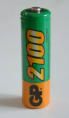
double-A rechargeable NiMH battery costs $2.50 and has a capacity of
1.2V x 2200 mAh = 2.64 wH. So that's 1000 / 2.64 x $2.50 = $947 per
kWh. So that looks pricier than the water battery, except for one thing:
You can charge the $2.50 AA 500 times, while the water battery costs
another $20 for each cycle. That brings the cost of the AA down to
$1.89 per kWh. Yes, there's also the cost of electricity to recharge
the battery, but that's less than twenty-five cents
for all 500 recharge cycles, total. So, would you rather pay $74
per kWh for electricity from a battery, or $1.89? Pretty
clear-cut.